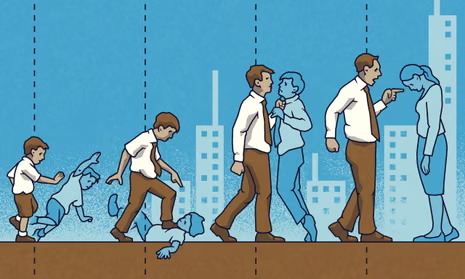
Hypnotherapy for child anxiety is to address the fact that child anxiety is rising rapidly.
The number of children referred to mental health services in England has risen by 10% in a year to more than one million, or one in every 10, according to a BBC report.
And it can leave parents scratching their heads. The modern experience of childhood is not like the one anyone over 40 experienced. Times and mindsets have changed.
Also services for children, such as CAMHS waiting times depend heavily on the specific service. For general mental dealt assessments you can expect to wait unto three months. However, neuro-developmental (Autism/ADHD) assessment waits routinely exceed two years.
10 reasons why child anxiety is rising.
1. Children are being pressured to excel at everything. Today's educational environment is often characterised by a strong emphasis on academic success and athletic achievement. Children are pushed to excel, sometimes from a very young age, creating a competitive atmosphere that can lead to stress and anxiety. The pressure to perform well can overshadow the joy of learning - just messing about - and foster an environment where mistakes are feared, rather than seen as opportunities for growth.
2. Adults are stressed and children pick this up. In the States The U.S. Surgeon General recently shared a report outlining the mental health crisis among parents. Forty-eight percent of parents say that most days, their stress is completely overwhelming and many parents lack coping skills or social support. Stressed-out parents may be less affectionate and less responsive to their kids, which can lead to an increased risk of behavior problems, lower self-esteem, and social isolation for kids.
3. Screen time cuts face-to-face time. Children are spending more time on screens. This affects sleep patterns and reduces the opportunities for face-to-face time - this is where emotional intelligence and resilience are built.
Social media, in particular, showcases an idealised lifestyle that leads to social comparisons. The pressure to maintain a perfect online persona adds layers of stress that previous generations never had.
4. Their schedules are overflowing. Many children today have schedules packed with extracurricular activities, leaving little time for relaxation and unstructured play. While these activities can be enriching, an over-scheduled lifestyle can lead to burnout and anxiety, preventing children from having the downtime necessary for mental and emotional recovery. ‘Just playing’ in other words.
5. We’re doing too much for them. Children need the opportunities to explore without supervision. Just like you might feel anxious when your boss stands over your shoulder and watches you type, kids feel anxious when we’re constantly monitoring, intervening, and guiding every move they make. It’s important for kids have opportunities to be independent, they may struggle to learn what they’re capable of doing on their own. This is sometimes called Helicopter Parenting, and it maybe well-intentioned, but over-accommodating or removing children from challenging situations can inadvertently reinforce their fears and foster anxious cycles.
6. They’re exposed to constant media. Access to global news means that children are aware of world issues like climate change, political unrest, economic instability and student loans. This heightened awareness can contribute to a sense of helplessness and anxiety about their future, as they grapple with problems that feel too large for them to influence.
7. They’ve been given the message that they’re fragile. From constantly checking on their whereabouts with apps to cleaning up after them, kids are getting the message that they’re fragile. Many of them were told they were “traumatized” by the pandemic as well (even though the vast majority weren’t), which sent a message to them that they’re broken or wounded, which affects their beliefs about how capable they are.
Children also hear themselves referred to as snowflakes and weak. Not helpful.
8. They don’t get enough time for unstructured, outdoor play. Concerns about safety, coupled with the strong addictive pull of digital entertainment, have led to a decrease in outdoor play. Nature and physical activity are known to have positive effects on mental health, providing stress relief and promoting emotional balance. The lack of these outlets can contribute to increased anxiety levels.
It’s the getting dirty, swinging across rivers, falling in, staying out until it’s dark, scaring yourself. It all builds the child. Without this, they have fewer opportunities to decompress, take risks, and learn the essential coping and problem-solving skills needed to build resilience.
9. They aren’t being taught how to build mental strength. This also applies to adults, but many children today are not equipped with effective coping mechanisms to manage stress. Without these tools, challenges and setbacks can feel insurmountable, leading to heightened anxiety when faced with life's pressures. They struggle to regulate their emotions, cope with unhelpful thoughts, and take positive action without guidance on how to build mental strength.
10. Conversations surrounding mental health may dismiss the seriousness of anxiety. While conversations about mental health have increased, terms like, “anxiety” and “trauma” are often used in a casual way. This waters down the experience for people who are struggling with mental health issues. Children who have anxiety disorders may feel dismissed when many people claim to have anxiety casually. This can exacerbate feelings of isolation and helplessness, as children struggle without the support they need.
Hypnotherapy for anxiety. Firstly do you understand your child’s anxiety?
Anxiety is a normal emotion, but when it becomes frequent or overwhelming, it can interfere with daily life.
Anxiety is the body's natural response to stress, it is the feeling of unease, dread, or fear about what is to come.
For most children it’s manageable, like before a test, concert or competitive match.
It’s when it becomes overwhelming.
Physically your child may say their heart is racing, their breathing is fast, they sweat, tremble, feel dizzy, or tense.
Psychologically they made constantly worrying, have a feeling of impending doom, be irritable, or find it difficult to concentrate.
There’s also behaviour change. For example:
They don’t want to go to school
Your child loses/gains weight
In the small hours they’re on social media but there’s absolutely no happiness about them
Give up on things they used to like - friends, sport.
They become insular.
They feel they don’t ‘fit in’ (this could be neurodiversity)
There’s physical and/or cyber bullying
What Is Hypnotherapy?
Hypnotherapy is a guided relaxation where your mind can become focussed and change for the better.
Children remain aware and are not “controlled." It’s not a trance.
In fact, children can respond really well to hypnotherapy. We can use their imaginations to improve outcomes. And this is something most children have in abundance: imagination. They’re used to reading or writing stories and plays and can ‘see’ better outcomes. Becomes heroes, overcome obstacles.
Hypnotherapy for child anxiety. What parents like to know.
Obviously I’d like you to come to the session. I’m guessing your child is a minor (I am also DBS cleared). Most children can be apprehensive.
A session is first and foremost about me understanding the challenge and explaining that none of us have to be out thoughts - or vent believe them.
For teenagers this is more like an adult experience, but for younger children often sessions are more like imaginative storytelling. Creating a safer world, a sense that the child has a super power.
Is Hypnotherapy Safe for Children?
Generally, yes. Although children should never be forced to participate. They need to have bought in to the process or we’re win nowhere.
Also this is not a replacement for medical or psychological treatment where these are needed.
Hypnotherapy for child anxiety. Which Children Might Benefit?
Examples include children experiencing:
- School anxiety - making friends, feeling like the ‘odd one out’
- Exam stress - 11+, common entrance, music grades, GCSE and A level
- Separation anxiety
- Social anxiety
- Sleep difficulties linked to worry
- Confidence issues
- Specific fears or phobias
Hypnotherapy for child anxiety. How can I help?
I have years of hypnotherapy training, continual professional development (especially through The Royal Society of Medicine) and have worked with children as young as four years old.
I see it as my job to first and foremost explain myself to your child and make them feel comfortable.
Also it’s for the child to decide who they want in the room. Some want mum and dad. Fine. Gran and grandpa. Fine. Some don’t want brothers and sister there for fear of being teased - or they maybe the problem. Fine.
Frequently Asked Questions
Can children really be hypnotised? Yes. Most already have. They know it as day dreaming - relaxing and taking their thoughts elsewhere.
What age is suitable? My youngest has been fours year old. A thumbsucker.
Will my child remember the session? Yes, hopefully. That’s how I change how they think feel and act for the better. How many sessions depends how deep the issue is embedded and how easily your child let’s it go.
How many sessions are usually needed? Hard to say at the outset. Usually I can make a different for the better in three/four sessions.
Is hypnosis the same as stage hypnosis? Same, same, but different. Let me explain. Getting someone to relax to the point of hypnosis is roughly the same for stage or clinical hypnosis. It’s the usage that’s different. I’m not interested in people dating the funky chicken or eating raw onions. I want your child less tressed, more confident and resilient.
Hypnotherapy for child anxiety. Let’s chat.
In this modern world child anxiety is becoming more and common. But it’s a also treatable.Hypnotherapy is a supportive option for most children and seeking help early can make a meaningful difference.
If you’d like to talk about the challenges your child is facing, please feel free to contact me at jamesthomas@thegentlemind.co.uk or call 07787563099.