Hypnotherapy for low self esteem is a way to take a look at yourself and calmly come to the conclusion that you’re good enough already. There’s no need to beat yourself up.
What does low self esteem look and feel like? Recognise the signs.
Typically, if you have low self-esteem you do the following: you’re extremely critical of yourself you downplay or ignore your positive qualities you judge yourself as inferior to your peers you don’t like praise - you don’t feel you’re good enough you use negative words to describe yourself such as stupid, fat, ugly or unlovable.
Low self esteem. Where does this come from?
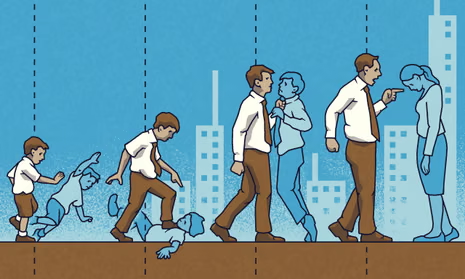
Our self-esteem is made up of thoughts and opinions often formed in our early years about who we are and what we’re capable of. For example: . your siblings were cruel to you . you were bullied at school . your parents never praised you, or openly criticised you . you were in an abusive/controlling relationship . you’ve beenbullied at work . you’re now going through thefemale menopause . you’re now going through themale menopause . you’ve absolutely no idea where it’s come from.
How can hypnotherapy help?
Having low self-esteem can impact not only our well-being but our potential, too. Negative thoughts about ourselves can happen when your subconscious tries to protect you. For example, if you have a bad experience failing a test at school, your subconscious might tell you that school or learning is something to avoid. To protect you, it may tell you that you to avoid school to avoid failure. What you’re doing is setting yourself up to worry every time you have to do a which, in turn, can negatively affect your abilities. Over time, you learn that you are ‘bad’ at school and automatically develop negative thoughts that you take into adulthood. This can then affect your confidence and make you wary of trying anything to do with studying, professional exams and hence hold you back. Now these automatic thoughts come from your subconscious. They are difficult to change through sheer willpower alone. Your subconscious doesn’t listen to reason. Negative thoughts and negative self-talk can become automatic, making it harder for you to make changes and challenge this way of thinking. This is why hypnotherapy for low self esteem can be such a powerful tool. Through hypnotherapy you can relax and ‘talk’ directly to your subconscious, change negative thinking patterns and encourage more positive responses. In effect you dial down your critical voice of fear, your subconscious can be taught to be encouraging and supportive. This means you can: . like and value yourself as a person . make decisions and assert yourself . recognise your strengths . feel able to try new or difficult things . show kindness towards yourself . move past mistakes without blaming yourself unfairly . take the time you need for yourself . believe you matter and are good enough . believe you deserve happiness.
What can hypnotherapy feel like? Basically you’re deeply relaxed.Hypnotherapyfor low self esteem is like mindfulness or meditation. It’s a state where you’re more open to suggestions. And where you find it easier to change for the better. Low self esteem is a learnt behaviour and working together using hypnotherapy for low self esteem means we can work on you to help you ‘unlearn’ your negative thinking. One thing I’m keen on is teaching you isself-hypnosis. This allows you to reinforce the positive suggestions offered in our sessions. Self-hypnosis can work as a boost, helping to reaffirm your new way of thinking long after your sessions are over.
My company (there is only me!) is calledThe Gentle Mind. Why? Because I believe you’re better version of yourself when you’re calmer, more relaxed. You can let go of old habits and be a new improved version of yourself. Easily learn new skills. I’ve worked with seven year olds up to 87 year olds. Smokers. Vapers. Addicts. Over eaters. Board-level executives. If you’re out of sorts I can try to get you to see how to be kind to yourself.
The evidence suggests that hypnotherapy is a real psychological state or process that can influence attention, perception, and behaviour for the better.