Hypnotherapy for highly intelligent men is all about when you’re too bright for your own good.
That’s not criticism. Or sarcasm. It’s getting you to recognise that high intelligence can be a gun you point at yourself.
You can still self sabotage.
You procrastinate to the Nth degree.
You’re frustrated you’ve not done as well as others. You can be outworked.
Your intelligence has created an over sensitivity.
You’ve reached the top and you’re bored. You think, “Is this ALL there is?” It’s underwhelming.
It’s all been too easy. Now what?
Basically high intelligence doesn’t protect you from self-sabotage.
Hypnotherapy for highly intelligent men let’s address your skepticism.
Hypnosis has been associated with woo woo, dream catchers, wind chimes, auras and chakras.
As well as dancing the funky chicken and eating raw onions on stag nights.
Not helpful. There’s plenty of science and big data behind hypnotherapy - using hypnosis to deal with physical health and psychological complaints.
Let me appeal to your intelligence. Here are 10 examples:
1. Hypnosis Produces Measurable Changes in Brain Function.
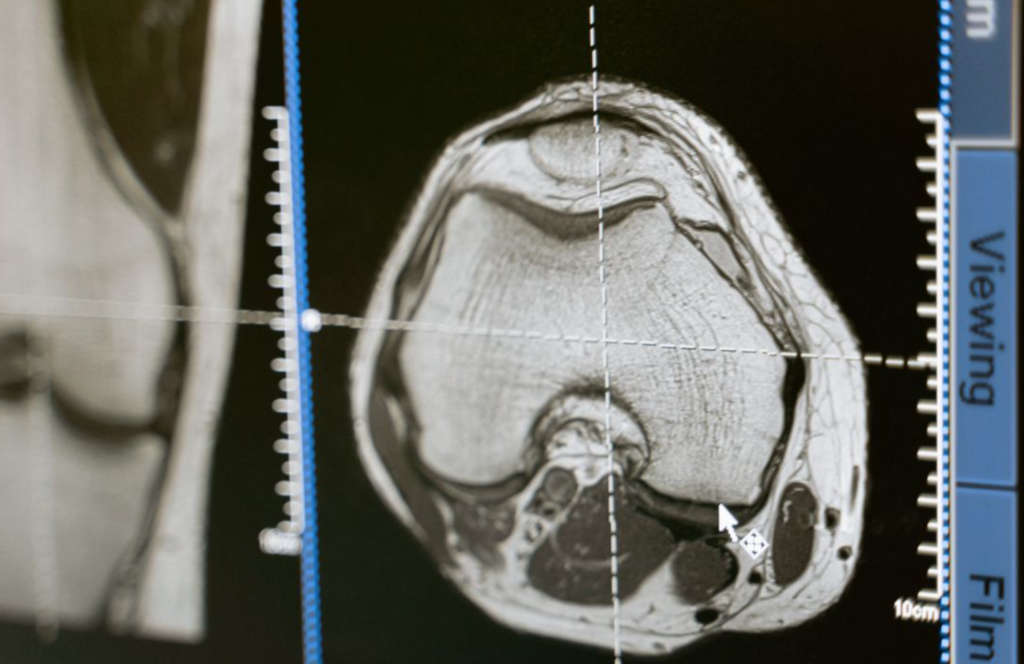
Neuroimaging studies demonstrate that hypnosis is associated with altered activity in the anterior cingulate cortex (ACC), insula, and prefrontal regions—areas involved in attention, pain perception, and self-regulation. These changes indicate that hypnosis reflects a distinct neurophysiological state rather than mere role-play.
Key sources: Rainville et al., 1997 (Pain), Oakley & Halligan, 2013 (Trends in Cognitive Sciences)
2. Functional Connectivity Shifts Under Hypnosis
MRI research shows reduced connectivity between the dorsolateral prefrontal cortex (executive control) and the default mode network (self-referential processing), alongside increased connectivity between executive control and salience networks. This supports enhanced focused attention and reduced self-monitoring.
Key source: McGeown et al., 2009 (Consciousness and Cognition)
3. Hypnotic Analgesia Demonstrates Objective Pain Modulation
Hypnosis can alter both the sensory and affective components of pain. Studies show reduced activity in pain-related cortical areas during hypnotic analgesia, supporting its use in clinical pain management.
Key sources: Rainville et al., 1997, Montgomery et al., 2000 (Health Psychology meta-analysis)
4. Meta-Analyses Support Clinical Efficacy
Systematic reviews and meta-analyses show that hypnotherapy works on pain management, irritable bowel syndrome (IBS), smoking cessation and anxiety.
Key sources: Flammer & Bongartz, 2003 (Contemporary Hypnosis), Schaefert et al., 2014 (Alimentary Pharmacology & Therapeutics – IBS)
5. Hypnosis Reduces Default Mode Network (DMN) Activity
The DMN is implicated in rumination and self-referential thinking. Reduced DMN activation under hypnosis correlates with decreased overanalysis and increased absorption.
Key sources: McGeown et al., 2009, Demertzi et al., 2011 (Frontiers in Human Neuroscience)
6. Suggestibility Correlates with Attentional Control
Hypnotic responsiveness is associated with cognitive traits such as absorption, attentional stability, and imaginative involvement. These traits are measurable and predictive of therapeutic response.
Key sources: Tellegen & Atkinson, 1974 (Journal of Abnormal Psychology), Cardeña & Terhune, 2014 (American Journal of Clinical Hypnosis)
7. Hypnosis Enhances Expectancy Effects (Without Being “Just Placebo”)
While expectancy contributes to outcomes, controlled trials demonstrate that hypnosis produces effects beyond placebo, or relaxation alone. The mechanisms include focused attention, dissociation, and altered cognitive appraisal.
Key sources:
Kirsch, 1994 (Psychological Bulletin), Montgomery et al., 2002 (Journal of Consulting and Clinical Psychology)
8. Stress Physiology Is Altered Under Hypnosis
Hypnosis is associated with parasympathetic activation and reductions in sympathetic arousal. Measurable decreases in heart rate, blood pressure, and cortisol levels have been documented.
Key sources: Gruzelier, 2002 (Neuroscience & Biobehavioral Reviews), Jensen et al., 2015 (International Journal of Clinical and Experimental Hypnosis)
9. Hypnosis Facilitates Neuroplastic Change Through Repetition and Imagery
Mental imagery—central to hypnosis—activates similar neural pathways as lived experience. Repeated hypnotic suggestion can reinforce adaptive neural patterns through mechanisms consistent with Hebbian learning.
Key sources: Kosslyn et al., 2001 (Nature Reviews Neuroscience), Halligan & Oakley, 2014 (Nature Reviews Neuroscience)
10. Hypnosis Is Endorsed in Clinical Guidelines for Specific Conditions
Gut-directed hypnotherapy is recommended in treatment guidelines for IBS, and hypnosis is recognised as an evidence-based adjunct for procedural pain and anxiety management.
Key sources: National Institute for Health and Care Excellence (NICE), IBS guidelines, American Psychological Association (APA) Division 30 reports
What we’re looking at here isn’t mind control — it’s mental precision. The ability to focus your thoughts. What’s happening is that you’re not losing control you’re gaining access to your thinking.
Also if you’re analytical, left side of the brain, you’re actually easier to hypnotise.
Why?
Hypnotic responsiveness correlates strongly with attentional control. That’s the capacity for sustained focus. Highly analytical individuals are often very good at directing and maintaining attention — a core requirement for hypnosis.
Highly intelligent men can appreciate complexity. Research shows that hypnotic responsiveness is associated with the ability to hold multiple representations in mind and engage in vivid mental imagery (Cardeña & Terhune, 2014). Typically you have a strong working memory and a rich internal visualisation - hypnosis plays to these.
And as an analytical person you don’t lose your critical faculty during hypnosis. You can choose to suspend it temporarily in a structured setting. That voluntary suspension is easier when someone understands the process intellectually. In other words your understanding and insight of hypnosis reduces resistance.
Also your skepticism often improves outcomes. Expectation influences hypnotic response (Kirsch, 1994), but skepticism does not block hypnosis. In fact, when you intellectually understand what hypnosis is — and what it is not — you often relax faster because you’re not defending against imagined loss of control. When the fear of “mind control” is removed, cooperation increases.
Hypnosis is collaborative. Analytical individuals tend to engage actively rather than passively — this improves therapeutic responsiveness.
So, as a bottom line, what I’m saying here is that hypnosis is not the surrender of intelligence.
It is the strategic use of it. If you can concentrate deeply, visualise vividly, and understand complex systems, you already possess the skill to makes hypnosis effective.
The question is not whether you are “too smart” to be hypnotised. It’s whether you are willing to use your intelligence differently.
Why hypnotherapy for highly intelligent men?
Because high intelligence doesn’t protect you from self-sabotage. In fact, hypnotherapy can help you separate your intelligence from an inner conflict you might be feeling.
And being the smartest guy in the room can become the problem. For example:
. You’re expected to solve all the problems - you’re the most ‘put upon’
. You’ve no one to act as a sounding board
. You get frustrated that others aren’t up to speed
. You see no future with those around you
. Others can’t ‘see’ your intelligence, they ‘don’t get you’
. You easily get bored
There’s thinking and there’s overthinking. You ruminate, grind to a halt, hyper-focus on problems. We can dial this down.
The danger of being a highly intelligent man.
If it all comes to you far too easily boredom can creep in. And then you’re vulnerable. Here are some of the issues I’ve had to deal with when highly intelligent man aren’t satisfied:
. Casual drug use that you think you can handle such as cocaine
. You turn to porn and prostitutes
. You gamble too much and keep upping the odds to satisfy your curiosity, or because you’re intelligent you think you can beat the system.
You can outsmart everyone — except your own nervous system. Remember logic is powerful, but it’s not always in charge.
The high-IQ male struggles I deal with. 10 examples.
(1). Your Mind Never Switches Off. Give it a rest. You don’t have to be ‘on’ all the time. It could be because you feel you have to carry everybody, or that you have to be the intellectual alpha: always right and always outthinking. Really?
(2). Analysis paralysis at an elite Level. You can talk yourself in, or out of any situation. Hold endless variations and outcomes as thoughts. Model all sorts of scenarios. Are you sure you’re not over cooking it?
(3). Success on paper, frustration in reality. Everything from exam and degree passes, promotions, all say success yet you can't understand why you feel so unhappy, empty even.
(4). Emotional suppression disguised as control. You're using logic to disguise how you really feel. You're not addressing your emotions.
(5). Why high performers burning out quietly. You never ask for help. You think that's a weakness. You should have the answers, surely?
(6). The loneliness of being hyper-capable. Everyone thinks you can do everything. And you're happy for them to believe this. And yet ...
(7). The CEO who couldn’t switch off. You feel indestructible. You could go on forever. Everyone's amazed at your drive. So you go on and on. Don't you think you need to find the off switch?
(8). The engineer stuck in over analysis. You have a brilliantly analytical mind. But thinking about yourself. Your emotional needs. Does not compute.
(9). The founder with quiet anxiety. An ofetn hidden phenomenon where entrepreneurs, despite appearing to be successful, composed and confident feel the opposite. There's a relentless low-level hum of stress and fear. You're driven by the immense personal responsibility of decision-making. It affects employees, investors, and customers
(10). The lawyer who out-argued himself. Brilliant in court. You defend. You prosecute. You rise. But what about your own thoughts and feelings?
Hypnosis v. Hypnotherapy.
They’re not interchangeable. Let me explain
Hypnotherapy for highly intelligent men is all about that: hypnotherapy.
Hypnosis is just a technique for getting you to be deeply relaxed.
Hypnotherapy is using hypnosis as therapy to deal with whatever challenge you’re facing. In effect ‘talking’ to your subconscious to create a calmer version of yourself.
One that doesn’t hurt so much.
How hypnotherapy actually works. My appeal to your intelligence.
Hypnotherapy for highly intelligent men is based on the science of focused suggestibility.
What I’m doing is creating a relaxed state of mind so I can ‘talk’ to your subconscious - the operating system running the show.
This process allows us to, in effect, re-pattern your automatic responses. Remove the internal handbrake.
Think of it as a software upgrade. Creating a 2.0 version of you.
Identity & Masculinity. Don’t be a male problem. For some men there is a version of yourself that you feel you have to live up to. Usually created by societal conditioning.
You feel you have to be hyper-rational (this denies your feelings) and you see strength as Stoicism. This is the wrong version of Stoicism. Stoics DO cry. Contrary to the misconception of being emotionless. Stoicism teaches you that emotions are natural, but they shouldn’t rule your life. When you become a true stoic you feel pain and sadness, but you process these emotions with reason and discipline, letting tears flow without being overwhelmed or allowing grief to define them.
What I’m looking to help you achieve is intelligence without inner conflict. Yes, your feelings will rise, but you don’t have to battle them. Understand them calmly. Don’t keep hurting yourself.
Time for you to change?
Hypnotherapy for highly intelligent men is when you’re ready to go deeper than self-help. To change for the better and be kinder to yourself at the deepest level.
Get in touch at jamesthomas@thegentlemind.co.uk or call me on 07787563099.
I’m in Leeds, York and Harrogate.
Think about it.