Ditch self help books and read.
It’s a strange instruction. You read self help books, so what am I asking you to read?
Well, not self help books.
I’m asking you to read other books that lead to a different outcome - action.
That’s you getting on, doing, as well as reading.
Firstly, why I don’t want you reading self-help books.
Nine reasons why you shouldn’t read self help books
You might find value in self-help books, but there are also solid reasons some people choose to ditch or reduce them. It’s less about them being “bad” and more about their common limitations. Here are the main arguments critics make:
1. They often recycle the same ideas
A lot of self-help books repeat similar concepts:
- “Believe in yourself” - that’s not a plan, it’s a statement
- “Work hard” - you’re probably already busting your balls.
- “Change your mindset” - I want to. And don’t tell me, show me, involve me in a process that does
These ideas aren’t wrong, but they’re often repackaged repeatedly with little new insight.
2. Reading can replace doing
Self-help can create an illusion of progress. You feel productive because you're learning about improvement, but you may not actually change behaviour.
For example, you’ve read 10 books about productivity but you’re still procrastinating.
3. The advice is generic
Self help books try and simplify things to formulas. Is that you? Your circumstances? Your state of mind? Your level of wealth? Your background?
4. Survivorship bias
Many self-help authors are successful and then explain their success as - yet again - a simple formula. Here’s the problem. Thousands can follow this path and only a few will succeed. But you only hear from the winners.
5. It can lead to self-blame
Some self-help messaging implies, “If you’re not successful, you just didn’t try hard enough.” This finger pointing ignores real constraints like your economic conditions, privilege, luck and the barriers you face.
6. It can become addictive
You keep looking for the motivation ‘hit’ instead of acting. You move from book to book to book, then maybe to podcast, to course, to seminar without implementing anything. You become an expert in other peoples’ successes.
7. They oversimplify complex problems
Issues like depression and trauma are complex. Unravelling them isn’t easy.
8. Reading isn’t doing
Self-help books give ideas and strategies, but real change requires consistent action. You read them for motivation, feel inspired temporarily, and then return to old habits without implementing the advice.
9. They Often Ignore Deeper Issues
Many problems involve deeper factors like trauma, mental health conditions, environment, or economic stress. A book alone cannot address these complexities.
Ditch the self help books and read - something else
Above outlines the problems with self-help books, but the self-help industry is enormous (it’s worth billions) because it taps into several powerful psychological tendencies in humans.
It’s not just about books—it’s about how our minds respond to hope, identity, and simple solutions. Here are the key psychological reasons it keeps growing.
1. Humans Are Wired to Seek Improvement (apparently)
People in the Western world naturally want to improve their lives—more success, happiness, confidence, money, or relationships.
And self-help promises a better version of yourself that’s faster to success and gives you control over your future
Books like Think and Grow Rich by Napoleon Hill or Atomic Habits by James Clear tap directly into this dream for self-optimisation.
Basically you’re paying for the possibility of transformation.
2. The “Quick Solution” Bias
Our brains prefer simple answers to complex problems.
Life problems (career, confidence, relationships) are complicated, but self-help often frames them as:
- “5 habits that will change your life”
- “10 steps to success”
- “The secret to happiness”
This plays into cognitive ease - your brain likes solutions that feel clear and manageable.
3. The Illusion of Control
Us humans strongly dislike uncertainty. Self-help books suggest that success is mostly controllable if you follow certain principles.
This gives readers psychological comfort:
“If I just follow these steps, my life will improve.”
Even if reality is more complicated.
4. The Dopamine Effect of Motivation
Motivational content creates a temporary dopamine spike.
When people read inspiring stories or powerful advice, they feel energised, hopeful and motivated. It’s like fast food life advice. That emotional high is rewarding - so you seek more books, videos, and seminars.
As I talked about earlier, it’s addiction to motivation itself rather than real change.
5. Other peoples’ success can become your success
Self-help stories usually highlight successful individuals, like entrepreneurs sports stars.
For example, Dale Carnegie’s ‘How to Win Friends and Influence People' shares persuasive strategies, but these books rarely show people who followed the same advice and failed, or the role of luck, timing, or privilege
Our brains naturally overestimate successful examples.
6. Identity and Belonging
Buying self-help books can become part of someone’s misguided identity. You think, “I’m someone who works on myself.”, “I’m improving.”
This identity feels meaningful -even if your behaviour hasn’t changed yet.
7. The Low Cost of Hope
Compared with therapy, coaching, or formal education, self-help books are cheap and accessible. For £10–£20, or a free audiobook, you get advice, stories, motivation and a feeling of progress
That makes the barrier to entry extremely low.
So ditch the self-help books and read fiction
Lasting change requires much more than reading. But reading as a way to be calm, focused, entertained, to dream, to relax, to be taken away to flights of fancy is fantastic.
Michael Mosley in his BBC series Just One Thing explains it brilliantly - how losing yourself in a novel for a short time each day can boost your brainpower, improve social bonds and, surprisingly, help you live longer.
Will this make you richer? Yes. For the experience.
Will this make you more successful? If you measure success as there being a significant impact on your overall health and longevity, yes.
Will this give you greater influence? No. And be comfortable with this.
Will it let you travel the universe? Yes. Reading is sometimes referred to as dreaming with your eyes open.
Will it boost your dopamine? Most likely.
Ditch the self help book and read. Here are the benefits
What I’m asking is you to consider is works of fiction. Get lost in a book and become more empathetic, less stressed, more imaginative, and mentally sharper.
Here’s how reading fiction (novels, short stories, etc.) has several proven psychological and cognitive benefits for you:
Improve your empathy. When you read fiction, you spend time inside characters’ thoughts and emotions. This helps you understand other perspectives and feelings better.
Research from organisations like the American Psychological Association suggests that literary fiction can improve theory of mind - the ability to understand what others are thinking or feeling.
Why does this matter? You become better at reading social situations and understanding people.
Strengthens your brain. Reading fiction triggers many brain regions at once - language processing, imagination, memory, and emotional processing. A well-known study from Emory University found that reading a novel can increase connectivity in the brain for several days afterward.
Why dos this matters? It’s like a workout for your brain.
You reduce your stress. Getting absorbed in a story can help your mind detach from your daily worries. Research from University of Sussex found that reading can reduce stress levels by up to 68%, sometimes more effectively than music or walking. Why does this matter to you? It helps your brain relax and reset.
You expands your imagination and creativity. Fiction requires you to visualise worlds, characters, and events without seeing them directly. Unlike watching a film, your brain must construct the environment itself. Why does this matter? You strengthen your creative thinking and imagination.
Your improve your language and communication. Reading exposes you to new vocabulary, different sentence structures and styles of storytelling. Why does this matter? Over time this improves your writing, speaking, and comprehension skills.
Help yourself understand life’s experiences. Stories often explore themes like love, loss, identity and moral dilemmas.Why does this matter? Books can act as a safe simulation of life, letting you experience situations without real consequences.
Reading. Think of it as hypnosis.
This is more what I mean when I say ditch the self help books and read.
The feeling of being lost in a book is actually hypnosis
I’ve never written a book, but I’ve read plenty.
I’m James Thomas a hypnotherapist.
Hypnosis is a form of focused attention just like reading.
I’m happy to explain how reading can be part of getting rid of stress, worry and anxiety.
Contact me at jamesthomas@thegentlemind.co.uk or call 07787563099.
Come and see me in Leeds, York or Harrogate.
And interns of fiction my two favourite characters are The Count of Monte Christo, Edmund Dantes (heroic) and Ignatius Reilly (dispicable).
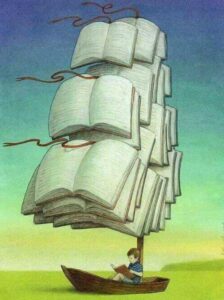
Ditch self help books and read
And books from the real world.
Meditations - Marcus Aurelius. It's a series of personal writings by Marcus Aurelius. It’s essentially his private journal, where he reflected on life, leadership, hardship, and how to live well. It's the basis of Stoicism, a philosophy that teaches to:
- Focus only on what you can control.
- Accept what you cannot control.
- Don’t be ruled by emotions (hard, I know).